

Blog website monetization means turning your blog content into a consistent source of income. For beginners, it simply involves using different strategies to earn money from the traffic that visits your blog. When readers consume your articles, guides, or reviews, monetization methods such as ads, affiliate promotions, sponsored content, or digital products help convert that attention into revenue. Blog monetization does not require a large team or technical background. With the right planning, even a small blog can generate income over time.
Monetization is important for long-term blogging success because it allows bloggers to sustain their efforts. Creating high-quality content takes time, research, and dedication. When a blog earns revenue, it becomes easier to invest in better tools, hosting, content improvements, and marketing strategies. Monetization also motivates bloggers to stay consistent and scale their digital presence.
Without monetization, many blogs struggle to survive in the long run. A monetized blog transforms from a hobby into a digital asset that grows steadily with traffic and authority. If you want professional support to monetize your blog effectively, connect with Monetizewire.com or contact +91 79881 34020 to get expert guidance for building a profitable blog platform.
What Is Blog Website Monetization?
Blog website monetization means earning money from the content you publish on your blog. In simple words, when people visit your blog to read articles, watch content, or find solutions, you can convert that traffic into income using different monetization methods. A blog is not just an information platform anymore; it is a digital asset that can generate consistent revenue when used correctly.
Bloggers turn content into income by creating valuable, problem-solving, and engaging content that attracts the right audience. Once visitors start coming regularly, bloggers earn through display ads, sponsored posts, affiliate marketing, and digital products. The more helpful and trustworthy the content is, the higher the chances of monetization success.
Monetization works best when content is written with user intent and search engine optimization in mind. Search engines reward blogs that offer clear answers, structured information, and good readability. This helps increase organic traffic, which directly impacts earning potential.
Also Read: What is Website Monetization?
How Blog Monetization Works (Step-by-Step)
Blog monetization follows a simple but strategic process that starts with traffic and ends with revenue. First, you create valuable content that solves real problems or answers specific questions. This content attracts visitors through search engines, social media, or direct visits. Once traffic starts coming in, the next step is choosing the right monetization model, such as ads, affiliate links, or sponsored content.
Understanding user intent is the most important part of this process. Visitors may be looking for information, solutions, or product recommendations. When your content matches their intent, users spend more time on your site and engage more deeply. This increases the value of your blog for advertisers and partners.
Finally, monetization works when value is exchanged. Users get helpful content, and you earn income through ads or recommendations placed naturally within that content. A well-structured blog balances user experience and revenue without harming trust.
To build a profitable monetization strategy with expert guidance, visit Monetizewire.com or contact +91 79881 34020.
Why Blog Monetization Is Still Profitable
Blog monetization remains profitable because the digital content economy continues to grow rapidly. More people rely on blogs for learning, product research, and decision-making. This constant demand creates ongoing opportunities for content creators to earn income.
Search engines still reward high-quality, helpful content. Blogs that focus on expertise, relevance, and trust can attract consistent organic traffic. Once established, this traffic becomes a long-term asset that generates income with minimal ongoing effort. This is why blogging is often considered a reliable source of passive income.
Brands are also investing more in digital advertising and influencer-style content. Blogs offer targeted audiences, making them valuable platforms for ads, affiliate promotions, and sponsored partnerships. Even small or niche blogs can earn well by serving a focused audience.
Types of Blog Monetization Methods
There are multiple blog monetization methods, and each works differently depending on your niche and audience. Advertising is one of the most common methods, where you earn money when users view or click ads. Affiliate marketing allows you to earn commissions by recommending products or services through special links.
Sponsored content involves brands paying you to publish articles or reviews on your blog. This method works best when you have authority and trust in a specific niche. Another powerful option is selling your own products, such as digital courses, ebooks, or services, which offers higher profit margins.
Each monetization method has its strengths. Ads work well for high-traffic blogs, while affiliate marketing performs better with intent-driven content. Sponsored posts offer higher payouts but require strong credibility. Choosing the right combination helps diversify income and reduce risk.
Monetizing a Blog with Ads (Beginner Guide)
Monetizing a blog with ads is one of the easiest ways for beginners to start earning online. Platforms like Google AdSense allow bloggers to display ads automatically on their websites. You earn revenue when visitors view or interact with these ads.
There are three common ad metrics beginners should understand. CPC means cost per click, where you earn money when users click an ad. CPM refers to cost per thousand impressions, meaning you get paid for ad views. RPM shows your earnings per thousand page views and helps measure overall performance.
Ad income depends heavily on traffic quality, niche, and user engagement. Blogs with helpful content and longer visit durations usually perform better. Placing ads naturally without harming user experience is key to long-term success.
Affiliate Marketing for Blog Monetization
Affiliate marketing is a powerful blog monetization method where you earn commissions by promoting products or services. You place affiliate links within your content, and when a reader makes a purchase through those links, you receive a percentage of the sale.
This model works best when recommendations feel natural and genuinely helpful. Blogs that focus on tutorials, reviews, and comparisons perform especially well. Trust plays a major role, as readers are more likely to buy when they believe your advice is honest.
Some of the best niches for affiliate income include technology, finance, health, education, and digital tools. These niches often have high-value products and strong buyer intent. Consistent content creation and SEO optimization help increase affiliate conversions over time.
Sponsored Posts & Brand Collaborations
Sponsored posts and brand collaborations become possible when a blog shows consistent traffic, a clear niche, and audience trust. Brands look for blogs that can genuinely influence readers, not just high traffic numbers. Even small blogs can qualify if their audience is targeted and engaged.
Beginners should focus on building content authority before approaching brands. Publishing helpful, niche-specific articles increases visibility and credibility. Brands prefer blogs that solve problems for a specific audience rather than covering general topics.
To attract sponsorship opportunities, beginners should:
- Create a clear niche identity
- Maintain consistent posting schedules
- Show engagement through comments and shares
- Publish content aligned with brand values
Once a blog demonstrates authority, brands may reach out directly or accept pitches from bloggers. Sponsored content should always feel natural and useful, not promotional. When done correctly, brand collaborations provide steady income while strengthening long-term blog growth and professional reputation.
Selling Digital Products Through Your Blog
Selling digital products is one of the most scalable blog monetization methods. Blogs can promote products such as ebooks, online courses, tools, or templates without inventory or shipping costs. Once created, digital products can be sold repeatedly with minimal effort.
Blogs work as trust-building platforms where readers already seek solutions. When content educates users, digital products feel like a natural extension rather than a sales pitch. This increases conversion rates and long-term revenue potential.
Popular digital product formats include:
- Ebooks for in-depth knowledge
- Courses for structured learning
- Tools and templates for practical use
Digital products scale better because income is not limited by time or client availability. As blog traffic grows through SEO, product sales increase automatically. This model allows bloggers to build predictable income while maintaining full control over pricing and branding.
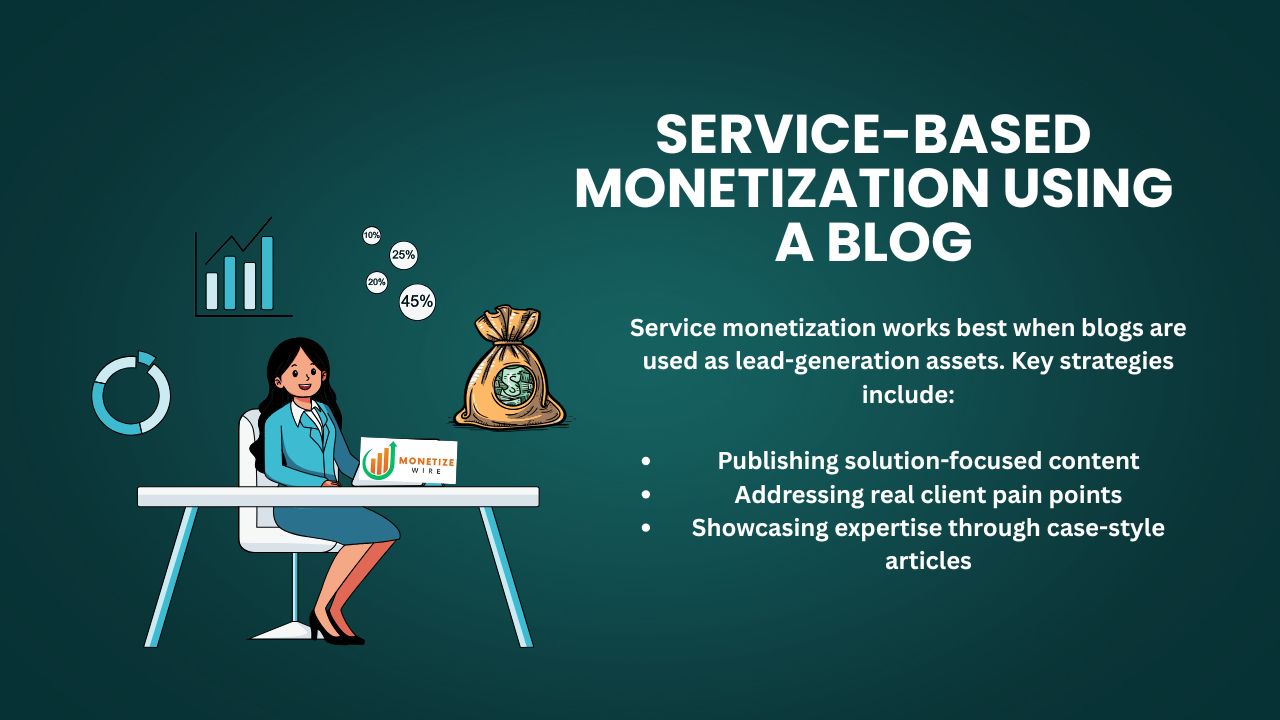
Service-Based Monetization Using a Blog
Service-based monetization allows bloggers to earn by offering skills such as freelancing, consulting, or SEO services. A blog becomes a portfolio that demonstrates expertise instead of directly selling services.
Educational content helps readers understand the blogger’s knowledge level. When users trust the information provided, they are more likely to inquire about paid services. Blogs work especially well for professionals who want inbound leads instead of cold outreach.
Service monetization works best when blogs are used as lead-generation assets. Key strategies include:
- Publishing solution-focused content
- Addressing real client pain points
- Showcasing expertise through case-style articles
This approach builds authority while attracting high-quality leads organically. Over time, a blog reduces dependency on paid ads and creates consistent client inquiries, making it ideal for long-term service growth.
Choosing the Right Niche for Blog Monetization
Choosing the right niche is critical for successful blog monetization. Profitable niches usually have strong demand, buyer intent, and monetization opportunities. Passion niches may be enjoyable but often lack income potential if audiences are unwilling to spend.
A balance between interest and profitability delivers the best results. Bloggers should research whether a niche supports ads, products, or services before committing long-term.
When evaluating niches, consider:
- Audience problems and purchasing intent
- Content demand and search volume
- Competition strength
SEO and competition analysis help identify niches where ranking is realistic. Low-competition, problem-focused niches often generate faster results. Selecting the right niche early saves time, increases monetization potential, and improves long-term SEO performance.
Importance of SEO in Blog Website Monetization
SEO plays a vital role in blog website monetization by driving consistent free traffic. Unlike paid methods, SEO attracts users who are actively searching for solutions, making them more likely to convert.
Search-optimized blogs continue earning even when new content is not published regularly. This creates compounding results over time. SEO builds authority, improves visibility, and strengthens monetization channels such as ads, products, and services.
Key SEO benefits for monetization include:
- Higher organic traffic
- Better audience targeting
- Increased trust and credibility
Long-term income benefits come from ranking content that attracts visitors month after month. With proper keyword targeting and quality content, SEO becomes the foundation for sustainable blog income and scalable digital growth.
On-Page SEO Tips for Monetized Blogs
On-page SEO plays a critical role in how well a monetized blog ranks and converts. A clean and logical content structure helps both users and search engines understand your page easily. Each blog post should focus on one primary keyword and a few related secondary keywords, placed naturally in headings, introduction, and body content.
Short paragraphs improve readability and reduce bounce rate. Proper internal linking helps distribute link equity across your blog and keeps users engaged longer, which positively impacts SEO performance.
Key On-Page SEO Focus Areas (for Monetized Blogs):
- Use clear H2 and H3 subheadings with keyword intent
- Optimize meta title and description for click-through rate
- Add internal links to relevant monetized or informational pages
- Place ads without interrupting content flow
User experience optimization is equally important. Fast loading speed, mobile responsiveness, readable fonts, and limited intrusive ads create a better experience. Google rewards blogs that balance monetization with value, making on-page SEO a foundation for sustainable blog income.
Content Strategy That Converts Readers into Income
A successful monetized blog relies on a smart content strategy, not just traffic volume. The key is balancing informational content with commercial content. Informational posts attract users through search queries, while commercial content turns that traffic into income.
Informational content focuses on solving problems and answering questions. Commercial content targets buying intent and monetization opportunities. Both are essential for long-term growth.
Funnel-Based Content Planning Approach:
- Top of funnel: Educational and how-to articles
- Middle of funnel: Comparison and solution-based content
- Bottom of funnel: Product reviews and monetized guides
This structure builds trust before asking users to convert. Instead of pushing ads aggressively, guide readers naturally through helpful content. When readers find consistent value, they are more likely to click ads, trust recommendations, and return to your blog. A clear content funnel turns casual visitors into loyal users and reliable income sources.
Google Algorithm Guidelines for Monetized Blogs
Google’s algorithms strongly favor blogs that prioritize user value over aggressive monetization. The Helpful Content Update focuses on rewarding content written for people, not just search engines. Blogs filled with thin, keyword-stuffed, or ad-heavy pages often lose rankings.
Another major factor is EEAT (Experience, Expertise, Authority, Trust). Google evaluates whether content shows real-world experience, accurate knowledge, and credibility.
EEAT Best Practices for Monetized Blogs:
- Write from practical experience or deep research
- Use clear author voice and consistent niche focus
- Publish original, in-depth content regularly
- Avoid misleading headlines and exaggerated claims
Monetized blogs that align with these guidelines perform better in search results. Ads should support content, not overpower it. Following Google’s quality standards ensures stable rankings, protects against algorithm updates, and builds long-term trust with both users and search engines.
Common Blog Monetization Mistakes Beginners Make
Many beginners fail at blog monetization due to avoidable mistakes. One of the biggest issues is placing too many ads early on. Excessive ads slow down pages, harm user experience, and reduce trust, which negatively affects SEO and earnings.
Another major mistake is publishing low-quality or copied content. Google easily detects duplicate or thin content, leading to poor rankings or even penalties.
Common Beginner Mistakes to Avoid:
- Monetizing before building traffic and authority
- Ignoring SEO fundamentals
- Using copied or AI-spun content without value
- Choosing income over user experience
Successful monetization takes patience. Beginners should focus first on quality content, niche authority, and consistent publishing. Monetization works best when it feels natural. Avoid shortcuts, and treat blogging as a long-term digital asset rather than a quick income scheme.
How Much Traffic Do You Need to Monetize a Blog?
There is no fixed traffic number required to monetize a blog, but realistic expectations are important for beginners. Small blogs can start monetizing with a few thousand monthly visitors, especially through ads or affiliate content.
Traffic quality matters more than traffic quantity. Targeted visitors with clear intent convert better than random traffic.
Income Examples at Different Traffic Levels:
- 5,000 monthly visitors: Small ad or affiliate income
- 20,000 monthly visitors: Consistent side income potential
- 50,000+ monthly visitors: Scalable monetization opportunities
Beginners should focus on growing steady, organic traffic rather than chasing viral numbers. With proper SEO, content strategy, and user trust, even moderate traffic can generate meaningful income over time. Consistency and patience are the real drivers of successful blog monetization.
Tools & Platforms That Help Monetize Blogs Faster
Using the right tools can significantly speed up blog monetization by helping you understand your audience, optimize content, and place ads more effectively. These platforms reduce guesswork and allow bloggers to make data-driven decisions.
Analytics, SEO tools, and ad networks play a crucial role in tracking performance and improving revenue. Analytics tools help you monitor traffic sources, user behavior, and high-performing pages. SEO tools guide keyword research, on-page optimization, and technical improvements that boost organic visibility. Reliable ad networks ensure your traffic converts into consistent income.
Content optimization tools further enhance monetization by improving readability, structure, and engagement. Well-optimized content increases time on site, lowers bounce rates, and improves ad impressions.
Key benefits of using monetization tools:
- Better understanding of audience interests
- Improved search engine rankings
- Higher ad visibility and click-through rates
- Faster identification of monetizable content
For beginners, starting with a few essential tools is smarter than using too many platforms at once. As your blog grows, advanced tools can be added to scale income efficiently while maintaining content quality.
Also Read: App Monetization: Best Android & IOS Application Monetization
Conclusion: Start Monetizing Your Blog the Smart Way
Blog monetization is not about quick wins but about building a sustainable digital asset. With the right strategy, even a new blog can generate steady income over time. Understanding your niche, creating valuable content, and choosing suitable monetization methods are the foundation of long-term success.
Smart monetization starts with patience and consistency. Instead of focusing only on earnings, bloggers should prioritize user experience, content quality, and trust. When readers find value in your blog, monetization opportunities grow naturally.
Key takeaways for successful blog monetization:
- Focus on quality content before income
- Use SEO to attract targeted traffic
- Choose monetization methods that match your audience
- Track performance and optimize regularly
For beginners, the journey may feel slow initially, but results compound over time. Stay consistent, learn from data, and adapt your strategy. With the right approach, your blog can evolve into a reliable and scalable income source.
Frequently Asked Questions About Blog Monetization
How long does it take to monetize a blog?
Most blogs take three to six months to start earning, depending on content quality, niche competition, SEO efforts, and consistency in publishing valuable posts.
Can beginners monetize blogs without technical skills?
Yes, beginners can monetize blogs using user-friendly platforms, basic SEO knowledge, and simple monetization methods like ads and affiliate content.
Is blog monetization still profitable in 2025?
Blog monetization remains profitable in 2025 with quality content, niche focus, organic traffic, and diversified income streams.
What traffic is needed to earn from ads?
Even low traffic blogs can earn from ads, but higher targeted traffic significantly increases ad revenue potential.
Which monetization method is best for new blogs?
Ads and affiliate marketing are best for new blogs because they are easy to implement and scale as traffic grows.